For many homeowners in Austin, one of the most common roofing questions is whether a roof should be repaired or replaced. When signs of wear begin to appear—such as missing shingles, leaks, or storm damage—it can be difficult to know which option makes the most sense.
In many situations, a roof repair may restore the roof and extend its life. In other cases, replacing the entire roof may provide better long-term protection and value for the home.
Understanding the differences between roof repairs and full roof replacements can help homeowners make a confident and informed decision.
What Roof Repairs Typically Address
Roof repairs focus on fixing specific areas of damage while leaving the rest of the roof intact. This approach is often used when the roof is still in generally good condition and the issue is limited to a small area.
Common roofing repairs include:
- Replacing missing or damaged shingles
- Repairing flashing around vents or chimneys
- Sealing small leaks
- Fixing damaged ridge caps
- Repairing minor storm damage
Professional roof repairs can restore the roof’s protective barrier and help prevent water intrusion. When performed correctly, repairs can extend the life of the existing roofing system.
Situations Where Roof Repair May Be a Good Option
Roof repairs are often appropriate when damage is limited and the roof still has many years of service life remaining.
Homeowners may consider roof repairs when:
- The roof is relatively new
- Damage is confined to a small section of the roof
- The overall roofing structure is still in good condition
- The issue was caused by a recent storm or isolated incident
In these cases, a targeted repair can restore the roof’s performance while preserving the existing materials.
What a Roof Replacement Involves
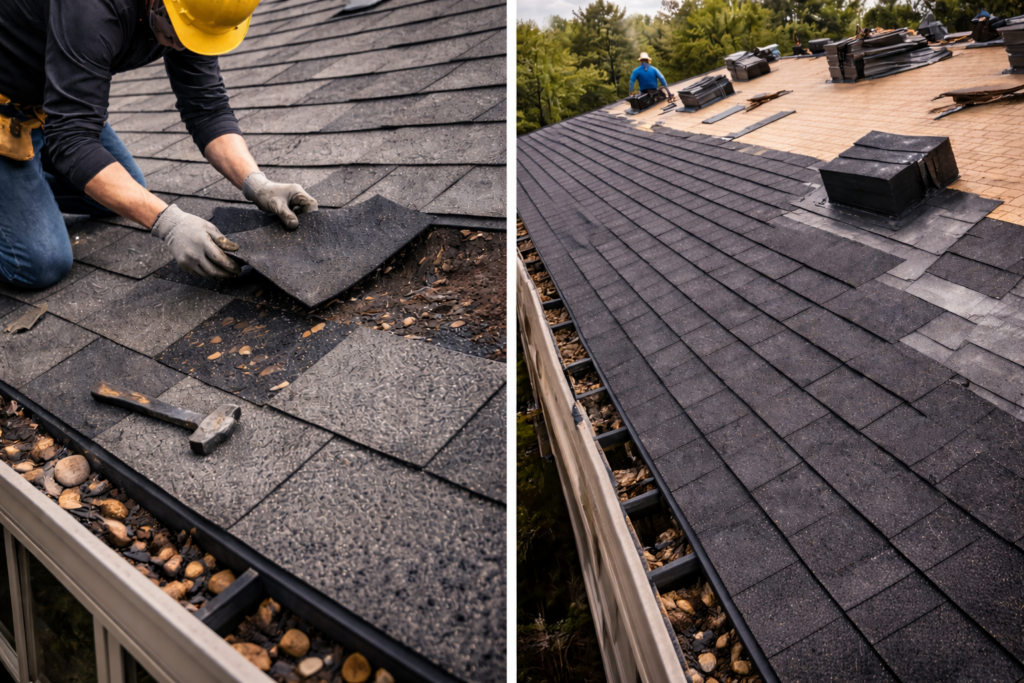
A roof replacement involves removing the existing roofing materials and installing an entirely new roofing system. This process allows roofing professionals to evaluate the underlying structure and install new materials designed for long-term durability.
During a typical roof replacement, contractors may:
- Remove old shingles or roofing materials
- Inspect and repair roof decking if needed
- Install new underlayment and moisture barriers
- Add updated flashing and ventilation components
- Install new roofing materials across the entire roof
A full roof replacement essentially resets the life of the roof and provides a fresh layer of protection for the home.
When Roof Replacement Becomes the Better Choice
There are situations where replacing the entire roof offers the most reliable solution.
Homeowners may consider roof replacement when:
- The roof has reached the end of its lifespan
- Damage appears in multiple areas of the roof
- Leaks are recurring or widespread
- Shingles are showing significant aging
- Storm damage has affected large sections of the roof
In these situations, replacing the roof can provide long-term protection and help avoid repeated repair work.
The Role of Roof Age
The age of the roof is one of the most important factors when deciding between repair and replacement.
Most roofing materials have a typical lifespan, and as roofs approach that timeframe, they may begin showing more widespread signs of wear.
When a roof is still relatively early in its lifespan, repairs may be sufficient to address isolated damage. When the roof is older and experiencing broader wear, a replacement may offer a more comprehensive solution.
Storm Damage and Roofing Decisions
Austin homeowners are familiar with storms that bring strong winds, hail, and heavy rain. Storms can cause various types of roof damage, ranging from lifted shingles to impact marks from hail.
After severe weather, roofing professionals typically inspect the roof to determine the extent of the damage.
Depending on the findings, the recommended solution may involve:
- Targeted repairs to damaged areas
- Partial replacement of roofing sections
- A full roof replacement if damage is extensive
A professional inspection helps determine the most effective approach.
Improving Roofing Performance During Replacement
When homeowners choose a roof replacement, they often take the opportunity to improve the overall performance of the roofing system.
Modern roof installations may include upgrades such as:
- Improved ventilation systems
- High-performance underlayment
- Enhanced flashing materials
- Architectural shingles or upgraded roofing materials
These improvements can help extend the lifespan of the roof while improving energy efficiency and overall durability.
How Roofing Inspections Help Guide the Decision
A professional roof inspection is one of the most valuable steps in deciding between repair and replacement. Roofing contractors evaluate the condition of the roof surface, flashing, ventilation, and underlying structure.
During an inspection, professionals look for:
- Shingle condition
- Signs of leaks or moisture damage
- Storm-related impacts
- Flashing performance
- Overall structural integrity
This evaluation provides homeowners with a clearer understanding of the roof’s current condition and expected lifespan.
Planning for Long-Term Protection
Both roof repairs and roof replacements play important roles in maintaining a home. Repairs can extend the life of a roof and address isolated issues, while replacements provide a fresh start when the roofing system has reached the end of its service life.
For homeowners, the goal is to ensure the roof continues protecting the home from weather and environmental exposure.
Working with an experienced roofing professional can help homeowners evaluate their options and determine which approach best fits the condition of the roof.
Final Thoughts
Deciding between roof repair and roof replacement is a common question for homeowners, especially after storms or when signs of wear appear.
While repairs may restore isolated damage, roof replacement provides a long-term solution when aging materials or widespread issues are present.
With the help of a professional roof inspection, homeowners can better understand their roof’s condition and choose the solution that offers lasting protection for their home.