If you’re getting estimates for a roof replacement, there’s a good chance you’ve seen the term “redecking” or “deck replacement” appear somewhere in the proposal. That’s when you know you’re in for a roof redeck.
For many homeowners, it’s an unexpected expense. After all, if you’re replacing the shingles, why would you need to replace wood underneath the roof as well?
The answer comes down to one simple fact: roofing materials can only perform as well as the surface they’re attached to. If the roof deck has been weakened by moisture, age, improper installation, or previous repairs, installing new shingles over it may shorten the life of the entire roofing system.
Understanding when redecking is necessary can help homeowners make informed decisions and better understand what they’re paying for during a roof replacement.
What Is Roof Decking?
Roof decking is the structural layer that sits between your roof framing and the roofing materials you see from the outside.
In most homes built over the past several decades, the decking consists of plywood or OSB (oriented strand board) panels attached directly to roof trusses or rafters.
Every component of your roofing system is installed on top of this surface, including:
- Underlayment
- Ice and water barriers
- Flashing
- Starter strips
- Shingles
- Ridge vents
Because the decking serves as the foundation of the roof, its condition directly affects the performance of every material installed above it.
Building Codes Require Solid Decking
One of the biggest misconceptions homeowners have is that redecking is optional.
While replacing all of the decking is rarely required, roofing contractors generally cannot install new roofing materials over wood that is structurally compromised.
Most building codes require the roof deck to be capable of supporting design loads and securely holding roofing fasteners. If plywood is rotted, delaminated, excessively soft, or unable to properly hold nails, replacement is often necessary before installation can continue.
In many cases, the decision is not based on contractor preference—it’s based on code requirements and manufacturer installation guidelines.
Why Decking Fails
Contrary to popular belief, decking rarely fails because it simply gets old.
Most decking problems are caused by moisture.
Even a small roof leak can introduce water into the roofing system. Over time, that moisture can become trapped beneath shingles and underlayment, gradually affecting the wood below.
Common causes of decking deterioration include:
- Long-term roof leaks
- Improper flashing around chimneys and penetrations
- Ventilation issues that create attic condensation
- Previous roofing layers trapping moisture
- Storm damage that was never fully repaired
The longer moisture remains present, the greater the likelihood that decking will require replacement.
What Roofers Look For During Tear-Off
Many homeowners are surprised when a contractor cannot provide an exact redecking cost before work begins.
The reason is simple: most of the decking is hidden until the old roof is removed.
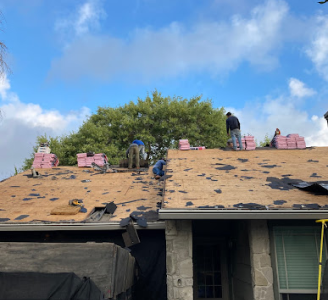
Once shingles and underlayment are stripped away, roofers evaluate the exposed decking for signs of deterioration.
Typical warning signs include:
- Soft areas underfoot
- Swollen panel edges
- Water staining
- Delamination of plywood layers
- Rot
- Mold growth
- Excessive flexing between rafters
Only after the decking is exposed can the contractor determine how much replacement is necessary.
Partial Redecking vs. Full Redecking
Most homes do not require complete redecking.
In fact, partial deck replacement is far more common.
A roofing contractor may remove and replace only a few damaged sheets around roof penetrations, valleys, skylights, or areas where leaks occurred.
Full redecking is typically reserved for situations involving:
- Extensive moisture damage
- Multiple roofing layers that concealed problems
- Significant structural deterioration
- Older plank decking that doesn’t meet modern roofing requirements
- Widespread fastening issues
For many homeowners, replacing several sheets of decking is enough to restore the roof’s structural integrity.
Older Homes Can Present Unique Challenges
Homes built several decades ago often use plank decking rather than modern sheet goods.
Plank decking isn’t necessarily a problem. In fact, many older plank decks remain structurally sound today.
However, some modern roofing systems require specific nail placement and fastening patterns that older decking configurations may not adequately support.
In these situations, contractors may recommend overlaying the existing deck with new sheathing or replacing portions of the roof deck to meet current installation standards.
What Happens If Damaged Decking Is Left in Place?
Skipping necessary deck replacement can create problems that extend far beyond the roof itself.
Damaged decking may:
- Reduce the holding power of roofing nails
- Cause shingles to become uneven
- Create low spots where water collects
- Allow future leaks to develop more easily
- Void manufacturer warranties
- Shorten the life expectancy of the roof
A new roof installed over compromised decking may look fine initially but often develops problems sooner than expected.
The Best Time To Address Decking Problems
The most cost-effective time to replace damaged decking is during a roof replacement.
At that point, the roofing materials have already been removed, providing direct access to the deck. Attempting to address decking issues later usually requires removing portions of the new roof, increasing labor and material costs.
This is why experienced roofing contractors carefully inspect the deck before installing new materials.
Redecking: Know
Redecking isn’t something every homeowner will need, but it’s one of the most important structural considerations during a roof replacement.
The condition of the roof deck determines whether your new roofing system has a solid foundation or whether hidden problems remain beneath the surface. While partial deck replacement is common, extensive redecking is usually only necessary when moisture damage, structural deterioration, or outdated materials are discovered during tear-off.
Understanding how decking works and why it sometimes needs replacement can help homeowners have more productive conversations with roofing contractors and make informed decisions about one of their home’s most important systems.