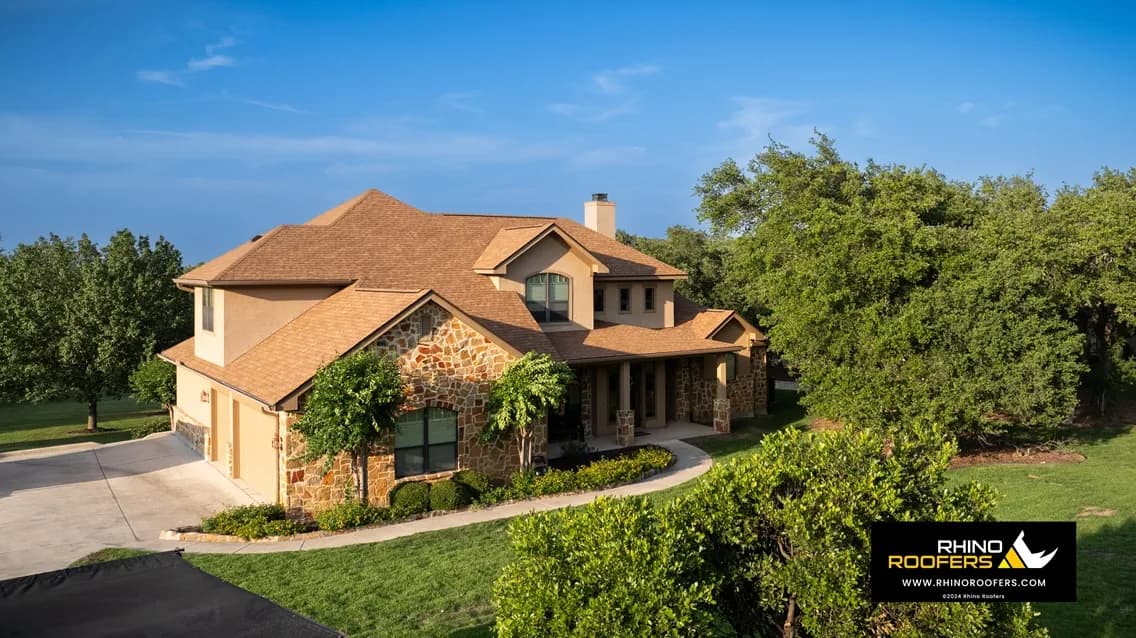
Roof Replacement
How Much Does Roof Replacement Cost in Austin? [2026 Pricing Guide]
Austin roof replacement costs range from $8,000 to $22,000 for most homes. Here's what actually drives the price — and how to get a fair deal.
Practical roofing advice for Austin homeowners — from surviving hail season to understanding your insurance policy. Written by local experts who know Central Texas weather.
Most homeowners start looking into a roofing problem long before they call a contractor — they want to know whether a stain on the ceiling means a small repair or a full tear-off, whether their insurance company will actually cover storm damage, or what a fair price looks like before someone shows up to quote it. This library exists to answer those questions honestly, in the same terms our crews use on-site with customers, rather than behind a sales pitch.
Every guide here is written from what we actually see on Central Texas roofs — the hail patterns that hit specific corridors each spring, the insurance adjuster process as it plays out for real claims, and the material and maintenance decisions homeowners weigh once they understand the tradeoffs. Nothing is outsourced to a generic content mill; if it's published here, it's something we'd tell a customer standing in their driveway.
Central Texas gets some of the most active hail weather in the country, and most of our traffic here comes from homeowners trying to figure out what to do in the days after a storm. These guides cover how to spot hail and wind damage from the ground, how the insurance claim and adjuster process actually works, what a fair settlement looks like, and where claims commonly go wrong — including the difference between damage that's worth filing on and damage that's better handled out of pocket. We also cover the paperwork side that trips people up most: how long you actually have to file after a storm, what documentation an adjuster expects to see, and what to do if an initial settlement comes back lower than the repair or replacement actually costs.
When a roof is past the point of repair, the decisions multiply fast: architectural shingles versus metal versus stone-coated steel, what actually drives a replacement quote up or down, and how manufacturer warranties compare to a contractor's own workmanship guarantee. This category breaks down real cost ranges and material tradeoffs for Austin's climate specifically, rather than generic national averages that don't hold up once Central Texas heat and hail are factored in. We also get into the details that change a quote after the contract is signed — what happens if decking underneath the old shingles turns out to be rotted, how HOA-approved color palettes narrow your options in certain neighborhoods, and how financing options compare for a project in the five-figure range.
A lot of the most expensive roofing problems start small and go unnoticed for years — a lifted ridge cap, a failing sealant strip, granule loss in a valley that never gets looked at until it shows up as a ceiling stain. These guides cover inspection frequency, what a thorough inspection actually checks component by component, and the early warning signs worth acting on before they turn into a full repair or replacement call. We also cover what a legitimate free inspection looks like versus a sales visit dressed up as one, since that distinction matters more than most homeowners realize once someone's already on the roof.
Commercial properties bring a different set of decisions than a residential re-roof — TPO membrane versus standing-seam metal, how a low-slope system handles Central Texas downpours, and how a phased re-roof gets scheduled around an occupied retail center or office park without shutting the building down. This category is written for property managers and building owners weighing those tradeoffs, not just homeowners.
Everything published here comes from our own team — the roofers, estimators, and office staff who handle installs and insurance claims across Round Rock, Cedar Park, Georgetown, and the rest of our Central Texas service area, not an outside content agency working from a keyword list. When a guide references how insurance adjusters evaluate a claim or how a specific material performs under Hill Country hail, that's drawn from claims we've actually worked and roofs we've actually installed, not a generalized template repeated across roofing sites nationwide.
We also revisit older guides rather than treating them as finished once they're published. Insurance carriers change how they process claims, manufacturers update warranty terms, and permitting requirements shift from time to time in cities across our service area — when that happens in a way that makes something here out of date, the guide gets updated instead of sitting untouched with advice that no longer applies.
This library covers our whole Central Texas footprint rather than being split city by city, since most of what's here — how a claim gets filed, how a material performs in this climate, what a thorough inspection checks — applies the same way whether your roof is in Round Rock, Georgetown, or Wimberley. For details specific to where you live, including local permitting offices, neighborhoods we serve, and the roofing challenges most common in your area, visit your city's service area page.
The guides below are grouped loosely by topic — storm damage and insurance, replacement and materials, maintenance and inspections, and commercial roofing — so you can jump to whichever situation matches yours. If you're mid-claim after a storm, start with the insurance guides. If you're weighing a full replacement, the materials and pricing guides will help you walk into an estimate already knowing the right questions to ask. None of it requires reading in order, and none of it assumes you already know roofing terminology.
Central Texas's hail season runs heaviest from early spring through early summer, and that's when the storm-damage and insurance-claim guides get the most use — worth reading before a storm hits if you want to know what to document and how fast to act, not just after. Late summer and fall, when hail risk drops but heat has finished stressing an aging roof for another year, tends to be when replacement and material decisions make more sense to research. Maintenance and inspection guides are useful on their own schedule — an annual read ahead of storm season is a reasonable habit regardless of your roof's age.
Browse by category using the cards below, or if a question you have isn't covered yet, call us directly — a real person who knows Central Texas roofing will answer, not a call center reading from a script.
Where a guide mentions cost, it's given as a range rather than a fixed number, because the real price depends on things a guide can't see — your roof's exact square footage, pitch, number of layers already on the decking, and whether the project is insurance-funded or paid out of pocket. Two homes on the same Central Texas street can land in very different places on a replacement quote for reasons that only show up once someone's actually walked the roof. Use the ranges here to know whether a quote you've received is in the right neighborhood, then confirm the specifics with a free, no-obligation estimate.
A short reference for terms that come up often across this library, in case you're reading without a roofing background:
Specific to Austin and the surrounding Central Texas market. Hail patterns, permitting requirements, HOA rules, and even which materials hold up best all vary by region, so a generic national guide often gives advice that doesn't apply here. Everything in this library is written against what we actually see on Central Texas roofs.
We add new guides as real questions come up often enough on the job to be worth writing down — after an active hail season, when insurance carriers change how they're handling claims, or when a material or code requirement shifts. There's no fixed publishing schedule; the goal is usefulness, not volume.
Yes. If you call with a question we haven't written about, we'll answer it directly and it often becomes the basis for a future guide. Use the contact page or call the number on this page — you'll reach the same people who write and fact-check this library.
No. They're meant to help you understand what's happening on your roof and what questions to ask, not to replace a hands-on look by a certified inspector. Anything here that touches your specific roof — damage severity, remaining lifespan, repair versus replacement — should be confirmed with a free inspection before you make a decision.
Our own team — the same roofers, estimators, and office staff who handle claims and installs across Round Rock, Cedar Park, Georgetown, and the rest of our Central Texas service area. Nothing here is produced by an outside agency without direct input from people who do the work.
Yes. Insurance carriers adjust how they evaluate claims, manufacturers update warranty terms, and cities occasionally revise permitting requirements — when any of that shifts in a way that makes an older guide inaccurate, we go back and update it rather than leaving outdated advice live.
Most of these guides apply across our whole Central Texas service area rather than being written city by city, since the underlying advice — how a claim gets filed, how a material performs in this climate — usually holds regardless of which town you're in. For city-specific details like permitting offices, neighborhoods we serve, and local roofing challenges, check that city's dedicated service area page instead.
Yes. A lot of homeowners read these guides specifically to sanity-check a quote they've already received — whether the price is in a reasonable range, whether a recommended material makes sense for their situation, and what questions to ask before signing. You don't need to be starting from zero to get value out of them.
Only to help you recognize a problem, not to walk you through fixing it yourself. Roof work carries real fall risk, and a repair done without the right materials or technique can void a manufacturer warranty or make the next insurance claim harder to support. Where a guide mentions a DIY-adjacent topic, it's framed around what to look for and when to call a professional, not a how-to.
Get a free, no-obligation roof inspection from Austin's most trusted roofing contractor. We show up on time and deliver exactly what we promise.
Or call us directly
(512) 764-3547